
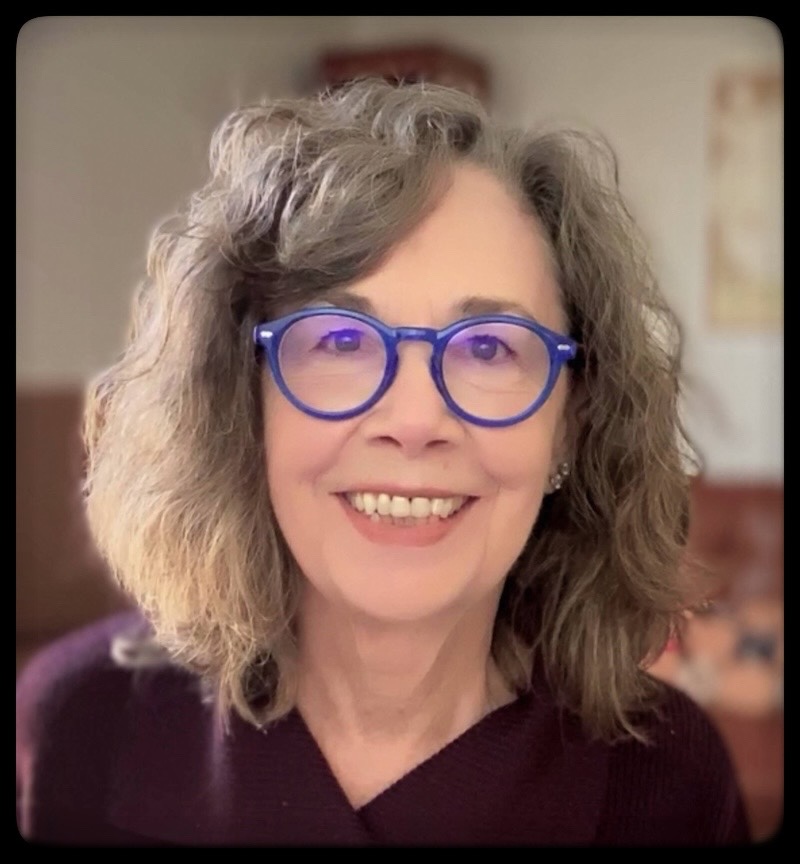
Kathleen Moran is a founder and faculty member of UC Berkeley's American Studies Program and has taught courses in History, English, Film, Geography, Architecture and Art History. She has written extensively about American political thought with a focus on 20th-century consumerism and popular culture. She is a recipient of Berkeley's Distinguished Teaching Award. She's teaching "California Noir" with us this winter.
I have to admit, I had to Google “California Noir.”
That’s okay — you won’t find much. I made it up. The phrase came out of my teaching. I’ve taught film courses, but I also use film to explore broader subjects — Los Angeles, food, the postwar years. I believe noir is more than a genre. It’s a way of seeing the world. It’s about anxiety, disillusionment, the dream gone bad. And right now, we’re living in a very noir moment in America. Everyone’s suspicious, everyone feels under threat. The culture itself feels dangerous. That’s part of why I wanted to teach this course now.
How did California become central to that idea?
I’ve taught a lot about California over the years. The more I study it, the more convinced I am that California is the most interesting place in the country — and the most noir — because this is where the dream burns brightest. From the Gold Rush on, California has represented possibility, reinvention, and freedom — but also disappointment. Every generation rediscovers that the dream has a darker side. Sunshine and noir have always been twins here.
Hollywood is part of that story, of course. The writers and artists who came to Los Angeles in the 1930s brought their own cynicism and turned it into art. The studios were desperate for content, and they churned out movies that reflected their time — fear, guilt, paranoia, desire. You can’t understand the nightmare unless you understand the dream.
I grew up understanding that. My father worked for MGM, and I was born in Los Angeles. Later, when the studio system collapsed, he never really recovered. I grew up in Portland, but I spent much of my childhood in movie theaters, often watching films from the middle or the end because of my father’s work schedule. That shaped how I watch movies — I’m less interested in plot than in structure, tone, and atmosphere. So in a sense, California Noir feels like home to me. I’m a native Angeleno who grew up in Portland and was educated in the Bay Area — the perfect noir triangle!
What are you most looking forward to about teaching this course at OLLI?
Honestly? Teaching people who know who Clark Gable was! My Berkeley students often don’t. I give them a quiz with 30 actors, 30 directors, 30 movies, and most recognize maybe two. At OLLI, I can mention Double Indemnity and not get blank stares.
I’m also looking forward to talking about films with people who’ve lived through some of the eras these movies evoke — who bring their own insights and memories.
What do you think will surprise members most about the course?
Two things. First, how much these films reveal about the times that produced them. I see movies as both symptoms and diagnoses of their culture. They show what people were anxious about — and how they made sense of those anxieties.
Second, how place-based noir really is. Architecture, light, geography — they aren’t just backdrops. They communicate emotion. Buildings can express isolation or menace as much as a character can. Noir makes that visible.
You’ve said before that you want to go deeper than the plot. What do you mean by that?
Most discussions about movies stay at the surface: “I liked it,” or “I didn’t like it.” I’m more interested in what a film is doing. What is it trying to make you believe about the world? What is it trying to make you feel — and how does it do that?
Lighting, sound, framing, gesture — those are tools of persuasion. Most people don’t consciously register the soundtrack, but they feel it. I sometimes show a horror clip with the sound off — it’s not scary at all. That experiment shows how much sound manipulates us emotionally.
So in class, we’ll focus on those details — the light slashing through Venetian blinds, the camera angle that suddenly feels threatening. That’s where meaning lives.
Many noir films were adapted from novels of the era — Chandler, Hammett. Are they part of your course?
Absolutely. The novels gave noir its voice — that clipped, ironic, world-weary rhythm. The sentences themselves sound like hard-boiled detectives: tough on the outside, wounded underneath.
We’ll read one novel and some short stories. I’ll have people read aloud in class, because hearing that language matters. The dialogue taught America how cynicism could sound beautiful. It’s jazz-like, syncopated, full of slang.
When we look at the films, we’ll talk about how that voice translates visually: the pacing, the pauses, the tension in a look or a line. Even silence in a noir scene has rhythm.
Earlier you mentioned noir as “a way of being in the world.” How does that idea connect to the present?
If you were in my class, I’d probably turn that question back on you. I don’t claim special insight into what’s happening right now. I just think noir gives us a useful lens.
When we study these films from another era, we get a bit of distance. We can look at fear, corruption, and disillusionment without being overwhelmed by our own moment. It’s a way of thinking through our times indirectly.
Honestly, teaching noir is how I process the world. I read the news and feel despair like everyone else. This helps me make sense of it. It’s how I stay engaged.
Any final thoughts on what you hope members take away from your course?
I hope they come away seeing film — and California — differently. Noir isn’t just cinematic — it’s deeply human. And maybe they’ll see our own time through that lens. Because the truth is, we’re still living the same story: chasing the dream under the California sun and trying not to lose ourselves in the shadows.